Common Specifications
- Capacities: Available capacities range from as small as 64 MB up to 128 GB, with modern standard options often starting around 8 GB to 32 GB.
- Interface: Most models offer either USB 2.0 or the faster USB 3.0 (also known as USB 3.1 Gen 1) interface. Some advanced designs feature dual USB Type-A and Type-C connectors.
- Read & Write Speeds:
- USB 2.0 models typically have write speeds of 3 to 10 MB/s and read speeds of 5 to 15 MB/s.
- USB 3.0 models offer significantly faster performance, with write speeds of around 20 to 45 MB/s and read speeds of up to 100 MB/s.
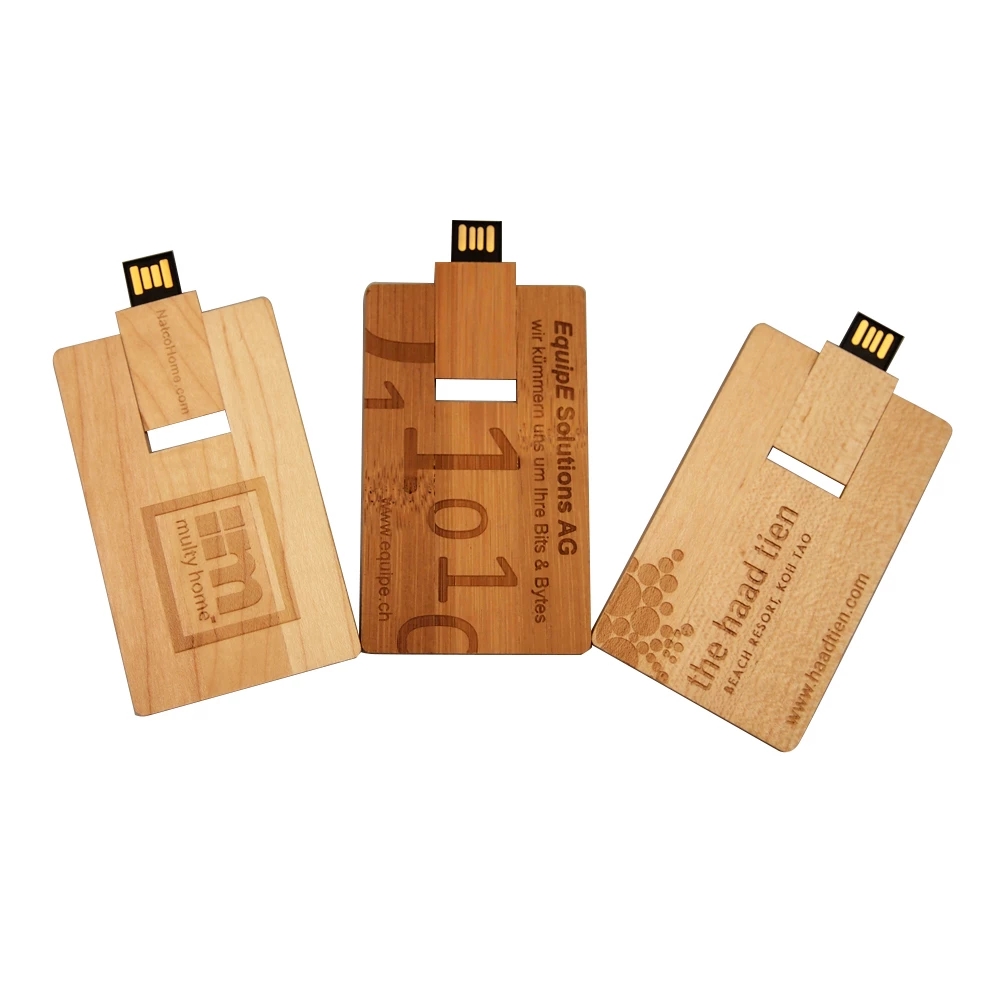
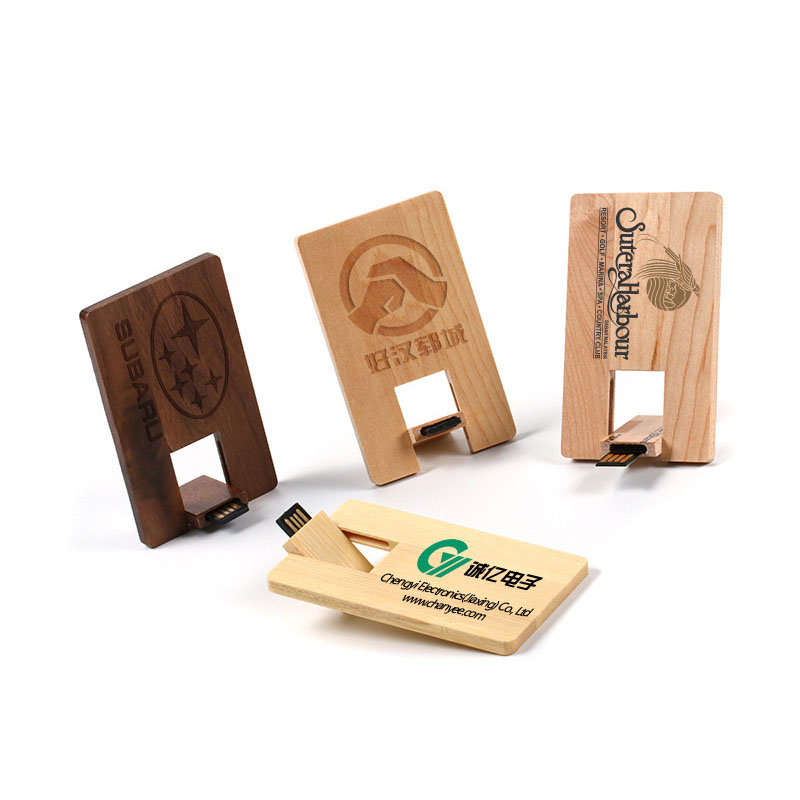
- Material: The outer body is made from various types of wood, including maple, walnut, bamboo, oak, cherry, and rosewood, each offering a unique look and texture.
- Dimensions: The drives are designed in a slim, card shape to fit easily into a wallet. Typical dimensions are around 85mm x 54mm x 3-5mm (roughly business card size).
- Compatibility: They are generally compatible with most operating systems, including Windows 7/8/10/11, Mac OS, and Linux, and support plug-and-play functionality.
- Durability: Many feature A+ class chips for reliable performance and are built to be shockproof, anti-static, and offer data retention for over 10 years.