
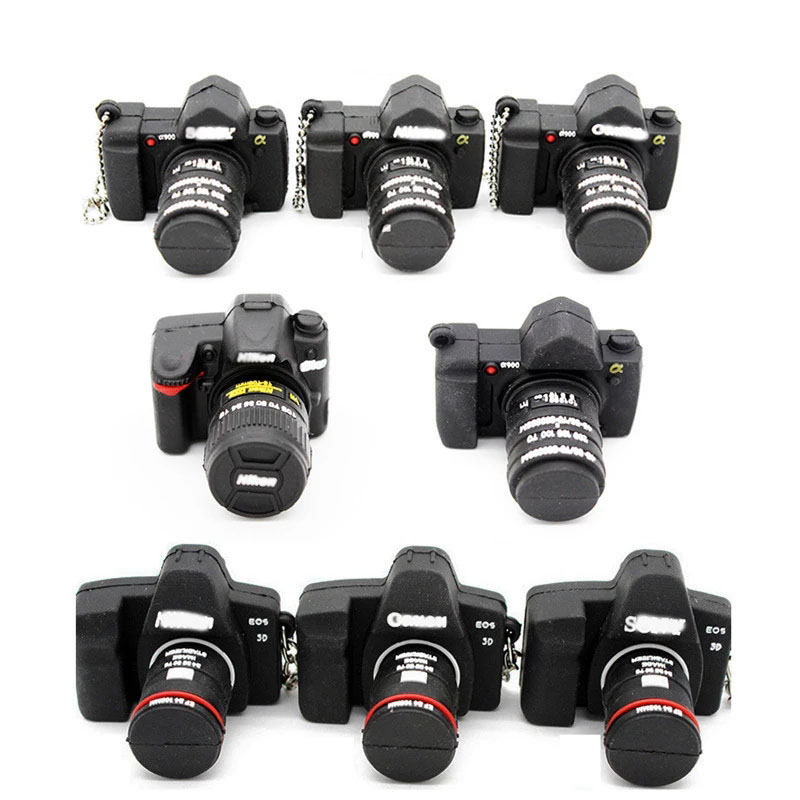
Camera-shaped USB flash drives blend novelty design with standard flash memory functionality, offering typical specs like capacities from 4GB to over 128GB and USB 2.0 or 3.0 interfaces.
Common Specifications
- Connectivity: Most camera-shaped USB drives feature a standard USB-A connector and are widely compatible with PCs, Macs, and Linux systems (requiring drivers only for very old operating systems like Windows 98/95).
- Interface Speed: The majority of models are USB 2.0. However, some high-performance or custom-ordered versions offer the faster USB 3.0 interface, which provides significantly quicker read/write speeds, ideal for large photo and video files.
- Capacity: Available storage ranges from smaller sizes like 4GB or 8GB (suitable for documents) to high-capacity options of 64GB, 128GB, and even up to 512GB (for large media libraries).
- Material and Durability: To achieve the camera shape, many drives are made from a soft material like rubber or silicone, which can offer shockproof and dustproof properties. Other materials include plastic, PVC, or even wood for a premium feel.
- Design Features: The drives are generally compact and lightweight, designed for portability. They often feature a removable cap or a sliding mechanism to protect the USB connector and may include a keychain loop or lanyard support.
- Performance: Read and write speeds can vary significantly based on the USB version and chip quality (Grade A chips are common). Basic USB 2.0 models might have speeds around 10MB/s, while USB 3.0 versions can reach read speeds of up to 90MB/s.
- Additional Features: Some novelty “camera” drives may contain an actual, small, low-resolution camera lens for discreet photo/video capture, a distinct feature from models that are purely data storage devices in a camera shape.


