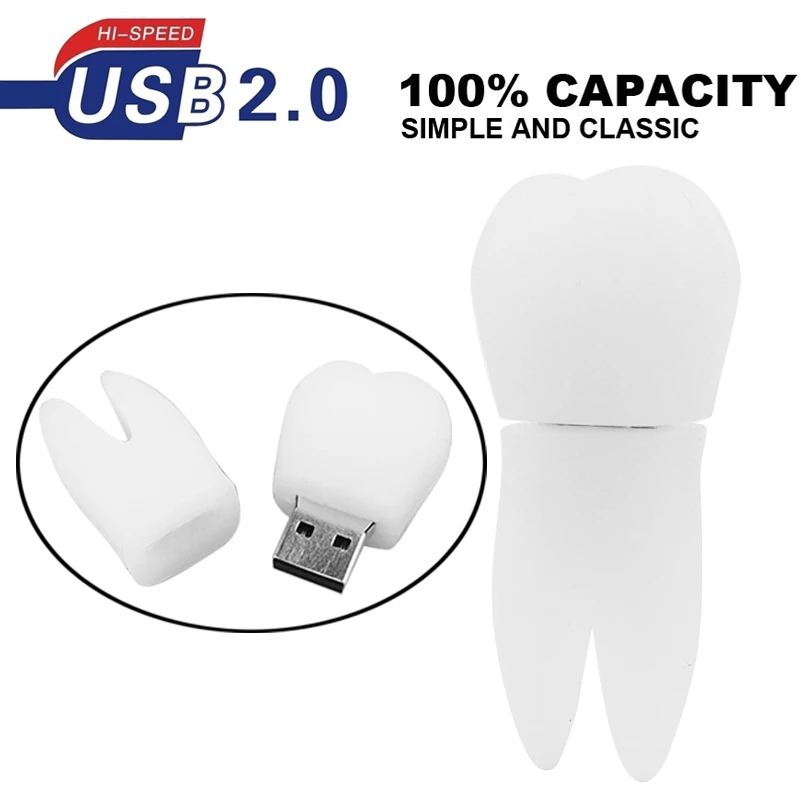
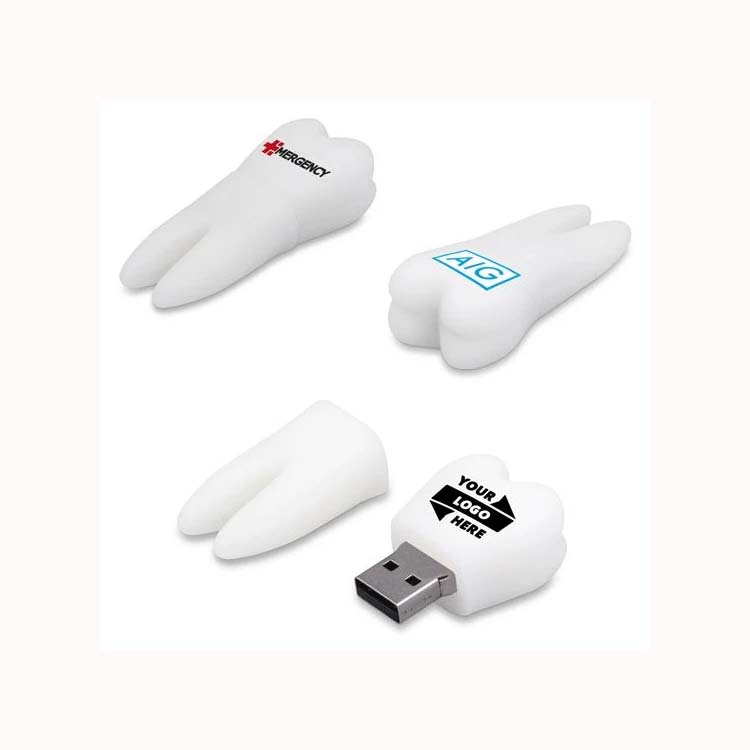
Tooth-shaped USB flash drives are a novelty item primarily for promotional use, with technical specifications that largely mirror generic flash drives, including variable storage capacities and common USB 2.0 or 3.0 interfaces. The key specifications vary by manufacturer and model.
General Specifications
- Capacity: Options typically range from 128MB to 128GB or more depending on the manufacturer and model.
- Interface: Available with USB 2.0 as a standard option, with USB 3.0 available upon request for faster transfer speeds.
- Material: Most commonly made from durable soft PVC or rubber, though metal or plastic variations exist.
- Compatibility: Designed as plug-and-play devices, compatible with Windows, Mac, and Linux operating systems without needing additional drivers (except for very old OS versions like Windows 98).
- Durability: Built with solid-state memory and protective casings, offering resistance to minor impacts, dust, and scratches.
Performance and Features
- Read/Write Speeds: Speeds vary significantly by the USB interface and specific internal components. A USB 2.0 drive might offer a read speed of around 15 MB/s, while USB 3.0 drives are much faster, with read speeds often over 100 MB/s.
- Portability: They are compact and often include a key ring loop for easy carrying.
- Additional Features: Some models may include an LED activity indicator or come with optional security features like encryption and password protection, particularly higher-end or customizable versions